Guides
Trading Discipline: 7 Rules for Beginners
· 6 min read · By Holdy Lab
Discipline is not a personality trait you either have or lack. In the Lo, Repin and Steenbarger study of day traders, no single personality profile predicted success, which suggests the skills are learnable. Below are seven rules that turn discipline into something you can check.
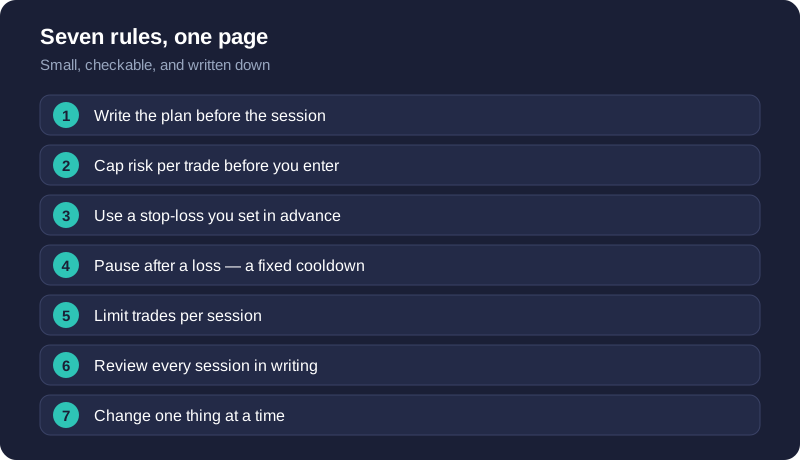
1. Write the plan before the session
Decide entry conditions, size, stop and exit before you see the result. A plan made in the heat of the moment is a rationalization. Later you can compare plan and action — the gap is your discipline score.
2. Cap risk per trade before you enter
Choose the maximum share of your account you are willing to lose on one trade and never exceed it. In crypto, where leverage magnifies moves, this rule is the core of risk management.
3. Set the stop-loss in advance
A stop set while calm beats a decision made while losing. The tendency to hold losers (the disposition effect) is exactly what an advance stop counters.
4. Use a cooldown after a loss
Risk tends to rise after losses (the break-even effect). A fixed pause creates the gap in which the plan can catch up with the emotion.
5. Limit the number of trades
The research on active trading, such as Barber and Odean (2000), links high activity to worse returns. A daily trade cap prevents activity from replacing decision quality.
6. Review every session in writing
A short written review is where experience turns into learning. Five lines are enough.
7. Change one thing at a time
If you change three habits at once you cannot tell which one helped. Pick one behavior, write an if-then rule for it, and check whether the pattern moved before adding the next.
How to practice them
Rules are easier to build in an environment where mistakes are cheap. A trading simulator lets you rehearse them under time pressure and see whether you actually followed them.
Educational content, not financial advice.
Sources
See your own patterns
Play a free simulated trading session and get a behavioral debrief — no signup, no real money.
Start Trader DayKeep reading
Holdy Lab content is educational and is not financial advice. Simulated results do not predict real results.