
Practice
A Trading Journal That Actually Changes Your Behavior
· 6 min read · By Holdy Lab
Many traders start a trading journal and quit within weeks. The usual reason is that it becomes a log of prices and results that nobody reads. A journal only pays off when it captures decisions and feelings, and when it ends in a change.
Reflection improves performance
In a field study, Di Stefano, Gino, Pisano and Staats had employees in a training program spend the last 15 minutes of each day writing and reflecting on what they had learned. They scored about 23 percent higher on the final test than colleagues who did not. The setting was a call-center training program, not trading, but the mechanism — deliberately articulating the lesson from experience — is the same one a journal uses.
It also fits Ericsson's account of deliberate practice: improvement comes from focused goals and informative feedback, and a journal is the simplest way to create both.
What to record
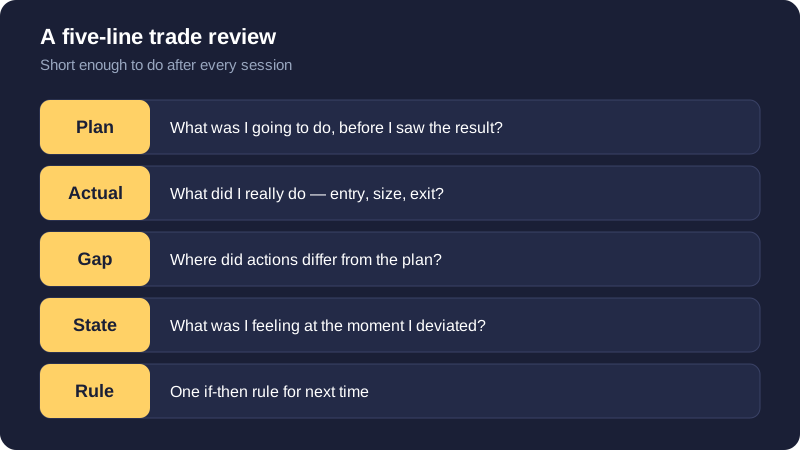
- Plan: what you intended before you saw the result — entry, size, stop, target.
- Actual: what you really did.
- Gap: where and by how much you deviated. This is the most valuable line.
- State: what you felt at the moment you deviated (rushed, anxious, bored, overconfident).
- Rule: one if-then rule for next time.
Write it before you know the outcome
Record the plan before the trade resolves. Writing it afterwards invites hindsight: you will remember the plan as whatever turned out to work. A pre-committed plan gives the gap line real meaning.
Review in batches, not one trade at a time
One trade is noise; a batch shows patterns. Once a week, read your gap and state lines together and count: how many deviations, at what times, after which events? Patterns like "most deviations follow a loss" are invisible in single entries and obvious in twenty. See how to draw the right conclusions from your data for how many entries you need before trusting a pattern.
Keep it small enough to survive
A journal that takes twenty minutes will not be done after a bad day, which is when it matters most. Five short lines completed every session beat a perfect template used twice. If keeping it by hand is the barrier, use a simulator that records the decisions for you and put your effort into the review.
Educational content, not financial advice.
Sources
See your own patterns
Play a free simulated trading session and get a behavioral debrief — no signup, no real money.
Start Trader DayKeep reading
Holdy Lab content is educational and is not financial advice. Simulated results do not predict real results.